Roughly four out of five homes in the country wear asphalt shingles, and most townhome and condominium roofs in Minnesota do too. They are the default for a reason: lower up-front cost, wide availability, and a straightforward install that most crews know cold. But "asphalt shingle" is not one product. It is three grades and several performance upgrades, and the gap between the cheapest and the best is large enough to matter to a board planning a reserve.
This page explains the types, walks through two upgrades a Minnesota association should understand (the FORTIFIED standard and impact-resistant shingles), and points out where the choice touches your reserve budget and your code obligations. It names national manufacturers and their published product lines. It does not rate or recommend any contractor or management company, and it does not tell your board what to buy.
What an asphalt shingle is
Every asphalt shingle is built the same basic way: a fiberglass mat for strength, a coating of asphalt for waterproofing, and a top layer of ceramic-coated granules (the colored grit you see from the ground) that shields the asphalt from the sun. What changes across the grades is how many layers, how thick, and how heavy.
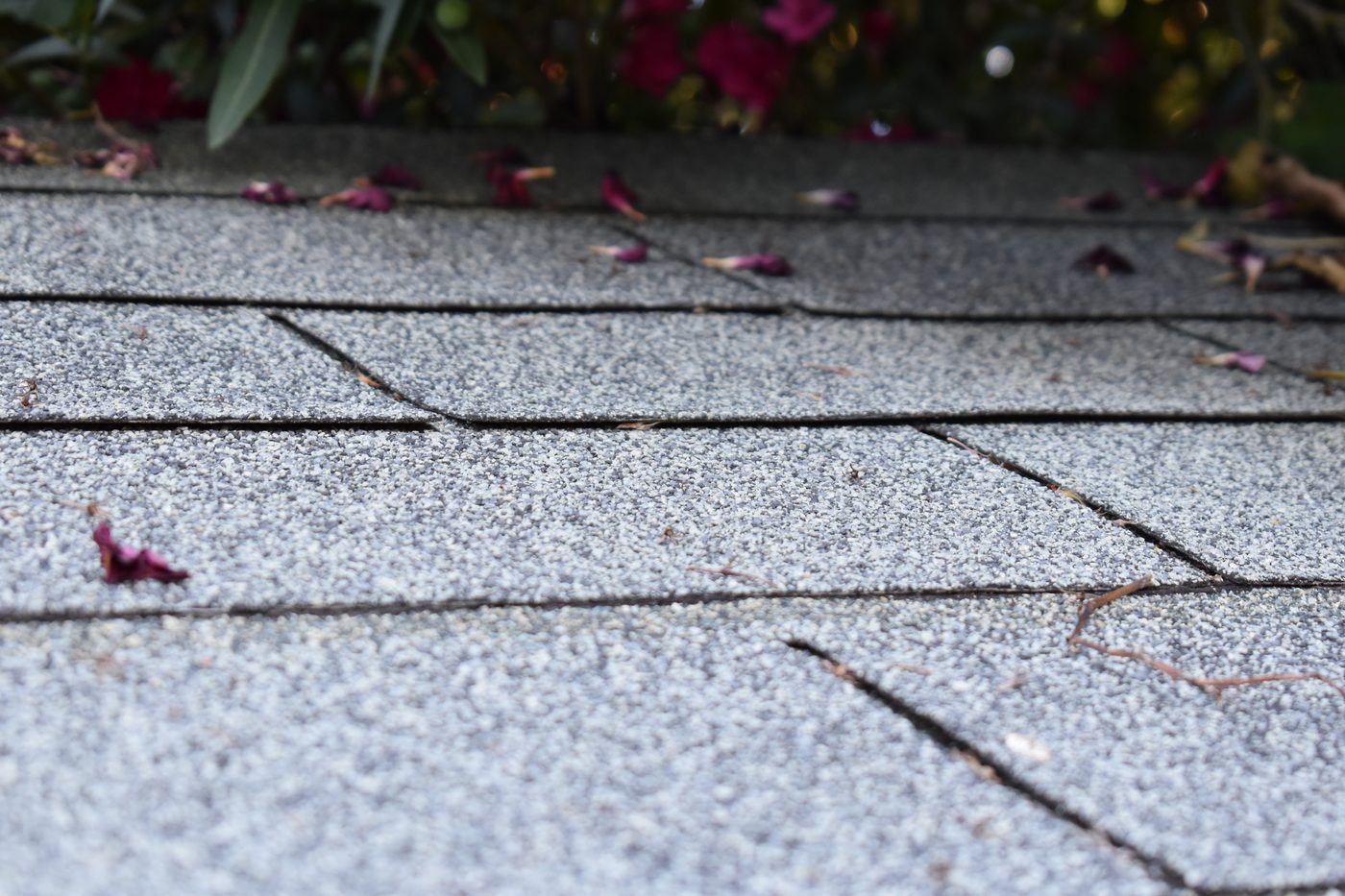
Three-tab shingles are the original flat, thin shingle. They lie in a single layer with cutouts that make three "tabs" per strip, so the roof looks uniform and flat. They are the cheapest option and the shortest-lived, commonly 15 to 20 years. Fewer associations install them today because the small savings rarely pay off over a roof's life.
Architectural shingles (also called dimensional or laminate shingles) are the modern standard. They laminate two or more layers together, which gives the roof depth and shadow lines and, more importantly, more material to resist wind and wear. Typical service life runs 22 to 30 years depending on the line and the install. This is the grade most Minnesota associations should treat as their baseline.
Designer shingles (also called luxury or premium shingles) are the top tier. They use heavier base mats, thicker asphalt, and layered profiles to imitate the look of natural slate or hand-split cedar shake at a fraction of the weight and cost of the real thing. Service life commonly reaches 30 to 50 years with proper installation and the required accessories. Published designer lines include GAF Grand Sequoia and Camelot II, Owens Corning Berkshire and Woodmoor, CertainTeed Grand Manor and Presidential Shake, IKO Crowne Slate, Malarkey Windsor, and Atlas StormMaster Slate. One practical note for boards: many premium warranties only reach their full term when specific brand accessories are installed and, in some cases, a manufacturer-certified crew does the work. Read the warranty for what triggers full coverage.
A quick honesty check on the numbers. A shingle marketed as "30-year" often delivers closer to 24 or 25 years in real conditions, so treat the headline number as a ceiling, not a promise, and rely on the written warranty terms.
The FORTIFIED standard (worth knowing for hail and wind)
FORTIFIED is a voluntary construction standard from the Insurance Institute for Business and Home Safety (IBHS), a research body funded by the insurance industry. It is not a product and not a brand of shingle. It is a set of roof-system upgrades proven in lab and field testing to hold up against roughly 130 mph winds, EF-2 tornadoes, and two-inch hail. A FORTIFIED Roof is built around three core upgrades:
- Ring-shank nails in an enhanced pattern. Ring-shank nails have raised rings along the shaft that grip the wood far better than smooth nails. Installed in a tighter pattern, they nearly double the roof deck's resistance to wind uplift (the force that peels a roof off in a storm).
- A sealed roof deck. The seams of the wood deck are taped or covered with a secondary water barrier, so that if wind strips the shingles off, water still cannot pour through the gaps. IBHS testing shows this reduces water intrusion by more than 95 percent.
- Reinforced edges and underlayment. The roof edge, the most vulnerable spot to wind, gets stronger attachment and detailing.
For asphalt specifically, FORTIFIED requires shingles that meet the highest wind ratings (ASTM D3161 Class F or ASTM D7158 Class H). An optional Hail Supplement uses the IBHS Hail Impact-Resistant Shingle Ratings, which test shingles against manufactured hail under more realistic conditions than the older steel-ball test. The 2025 version of the standard also requires a FORTIFIED-certified roofing contractor to do the work, and a FORTIFIED designation expires after five years, needing a redesignation inspection to stay current.
Where this matters for Minnesota: FORTIFIED is most common in hurricane and high-wind coastal states, where insurers offer premium discounts for it, and it is less common here. But the standard is buildable anywhere, and Minnesota's hail and straight-line wind exposure make the sealed-deck and enhanced-nailing upgrades genuinely useful, whether or not a board pursues the formal designation. Any insurance discount or grant varies by insurer and state, so a board should confirm availability with its own carrier rather than assume one exists. (Learn more at fortifiedhome.org (Opens in a new tab).)
Impact-resistant (Class 4) shingles
Hail is the reason this category exists. Impact-resistant shingles are tested under UL 2218, an independent standard that drops a steel ball onto the shingle and rates it Class 1 through Class 4 by how large a ball it survives without cracking. Class 4 is the highest, tested with a 2-inch ball dropped from 20 feet.
Manufacturers reach Class 4 mainly by adding a rubber-like polymer to the asphalt (often called SBS-modified or "rubberized" asphalt) that lets the shingle absorb a hit and flex instead of cracking. Published Class 4 lines include GAF Timberline AS II, Atlas StormMaster, Owens Corning Duration STORM, Malarkey's rubberized lines, and CertainTeed impact-resistant products. From the street, a Class 4 shingle looks the same as a standard architectural shingle; the reinforcement is inside.
Two things a board should hold onto:
- Class 4 is a cracking test, not a dent-proof or hail-proof guarantee. The rating means the shingle resists cracking through the mat, not that it will look untouched after a severe storm.
- Impact-resistant shingles often qualify for an insurance premium discount, but not always. Discounts vary by insurer and are not automatic, so confirm with your carrier before assuming the upgrade pays for itself. Impact-resistant lines typically run about 10 to 25 percent more than standard shingles.
What it means for your association
Match the grade to the reserve horizon, not the sticker price. Three-tab's small savings rarely survive the math over a full roof cycle, which is why architectural is the sensible floor for most associations. Designer shingles cost more up front but can extend the replacement cycle and lift curb appeal (and property value) across the community. Where hail is a repeated line item in your loss history, Class 4 shingles or a FORTIFIED-style sealed deck can reduce both damage and, potentially, premiums.
Minnesota code facts to confirm with your building official (from the 2020 Minnesota Residential Code, these apply to asphalt regardless of grade):
- An ice barrier (a self-adhering ice-and-water membrane) is required from the roof edge to at least 24 inches inside the exterior wall line. This is your primary defense against ice dam leaks.
- Attic ventilation of at least 1 square foot of vent area per 150 square feet of attic is required. Ventilation, not the shingle, is what actually holds ice dams down.
- Asphalt shingles are not permitted on slopes below 2:12 (two inches of rise per foot of run), and slopes from 2:12 to 4:12 require a double layer of underlayment. Low-slope sections on any building may rule asphalt out.
Treat the above as the questions to raise, and confirm compliance for your specific buildings with your local building official and a licensed roofing professional.
Switching materials? Your underlayment and watershed change.
If your association is converting away from asphalt (to metal, tile, slate, or a synthetic), the shingle is only part of what changes. The underlayment requirements differ by covering, the roof's weight load can rise sharply (real slate and tile especially), and the way water and melting ice move at the eaves, valleys, and flashings changes with it. The Minnesota ice-barrier rule still applies to every covering. Before committing to a material switch, get a structural and watershed review from a qualified professional. We cover the mechanics on our Attic Ventilation and Insulation page.
Methodology
So you can see how this page was built.
- What is covered: the three asphalt shingle grades and two performance upgrades (FORTIFIED and impact resistance), described from manufacturer published specs and independent standards. National manufacturers and product lines are named for reference only. No local contractors, installers, or management firms are rated or recommended anywhere on this page.
- Sources: manufacturer published specs and warranties, the UL 2218 impact standard, the IBHS FORTIFIED Home Standard, and the 2020 Minnesota Residential Code. Named and linked below.
- Last updated: 2026-07-20. Product references are re-verified annually or when a major product change surfaces.
Sources
- Insurance Institute for Business and Home Safety, FORTIFIED Home: fortifiedhome.org/roof (Opens in a new tab)
- UL 2218 impact standard overview (IBHS): ibhs.org (Opens in a new tab)
- 2020 Minnesota Residential Code, Chapter 9 (Roof Assemblies), via ICC: codes.iccsafe.org (Opens in a new tab)
- Minnesota Department of Labor and Industry, residential code: dli.mn.gov (Opens in a new tab)
- University of Minnesota Extension, home resources: extension.umn.edu (Opens in a new tab)
- Manufacturer published specs: GAF (Opens in a new tab), Owens Corning (Opens in a new tab), CertainTeed (Opens in a new tab), IKO (Opens in a new tab), Malarkey (Opens in a new tab), Atlas (Opens in a new tab)
Next step
Planning a roof replacement or weighing an upgrade to impact-resistant or designer shingles? Download the Roof Replacement Evaluation Worksheet to walk your board through grade, warranty, and code questions in one place, or send your specifics through the question form and we will point you to the right resources.