"Metal roof" covers far more ground than most boards expect. It runs from the sleek vertical panels on a modern townhome, to a stamped steel shingle that looks like slate from the street, to the through-screwed panels on a pole barn. These are different products with different costs, different looks, and different maintenance needs. This page sorts them out so a board knows what it is actually being quoted.
There are two useful ways to categorize metal roofing: by profile (how the panels attach and what they look like) and by material (steel, aluminum, or a premium metal like zinc or copper). We will walk both, then cover what metal means for a Minnesota winter and a reserve budget.
This page names national manufacturers and product lines for reference. It does not rate or recommend any contractor or management company, and it does not tell your board what to buy.
Metal roofing by profile
Standing seam
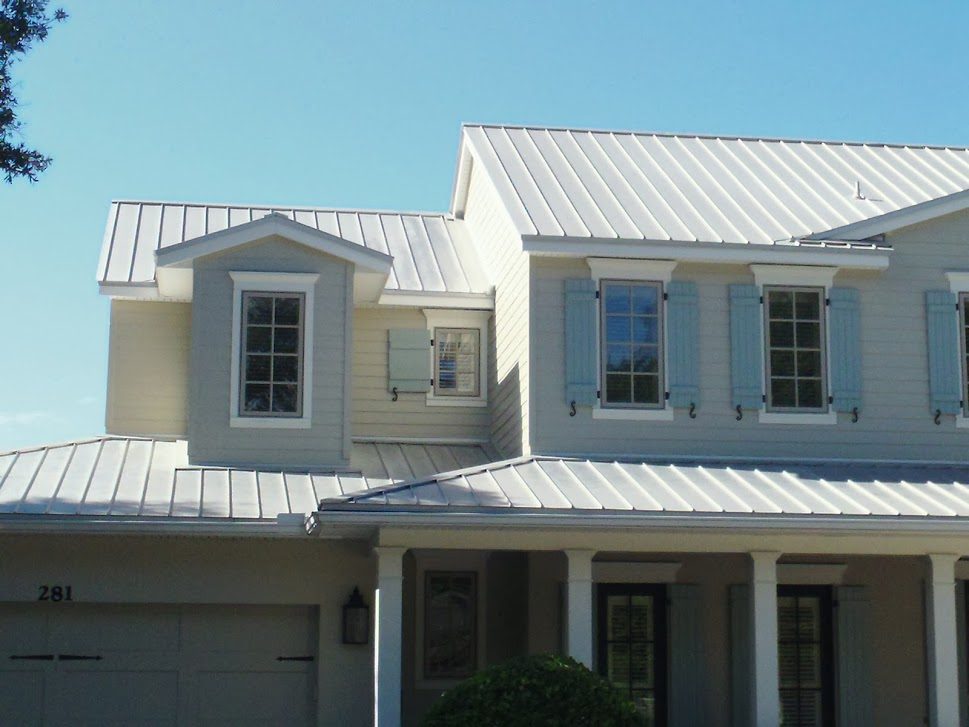
Standing seam is the premium architectural metal roof. Panels run vertically up the slope and lock together at raised seams, with the fasteners hidden underneath (a "concealed fastener" design, which means no exposed screw holes to leak over time). It gives clean, modern lines and the longest service life in the category, commonly 40 to 70 years. National manufacturers include McElroy Metal, Petersen Aluminum (PAC), Sheffield Metals, ATAS International, and Englert. Most standing seam systems work on slopes of 3:12 (three inches of rise per foot) and up, and some mechanically seamed profiles go much lower. It is the highest-cost metal option, typically two to three times an asphalt roof.
Exposed fastener panels
Exposed fastener panels (also called through-fastened panels) are screwed straight through the face of the panel into the deck, so you can see the screw heads in rows. Each screw uses a rubber washer to seal the hole. This is the lowest-cost metal option and the fastest to install, which is why it dominates barns, sheds, and agricultural buildings. The tradeoff is maintenance: the rubber washers dry out and the screws can back out over the years, so an exposed fastener roof needs periodic re-fastening and gasket replacement to stay watertight. For a residential association, exposed fastener is usually the wrong tool unless it is on a detached utility structure.
Metal shingles and tiles
This is the category most associations do not know exists, and it is often the best fit for a townhome or condominium that wants the look of a traditional roof with metal's durability. These are small metal pieces, usually stamped steel or aluminum, formed to imitate slate, cedar shake, or clay tile, and interlocked on multiple sides for wind resistance. They break into three sub-types:
Stone-coated steel. A steel panel is coated with an aluminum-zinc alloy for corrosion resistance, then finished with a layer of natural stone granules bonded on top (similar to the granules on an asphalt shingle). The result mimics shake, shingle, or barrel-tile looks, resists fading, and muffles rain noise. These commonly carry 50-year or longer warranties and reach the highest UL 2218 Class 4 impact rating. The brands have consolidated, so it helps to know who owns what: DECRA (owned by IKO Industries) offers Shake, Shingle, and Villa tile lines with hail warranties up to 2.5 inches. Gerard, Metro, and the former Boral lines are now Unified Steel Stone Coated Roofing under Westlake Royal Roofing Solutions. Metrotile is part of the same global IKO Metals family.
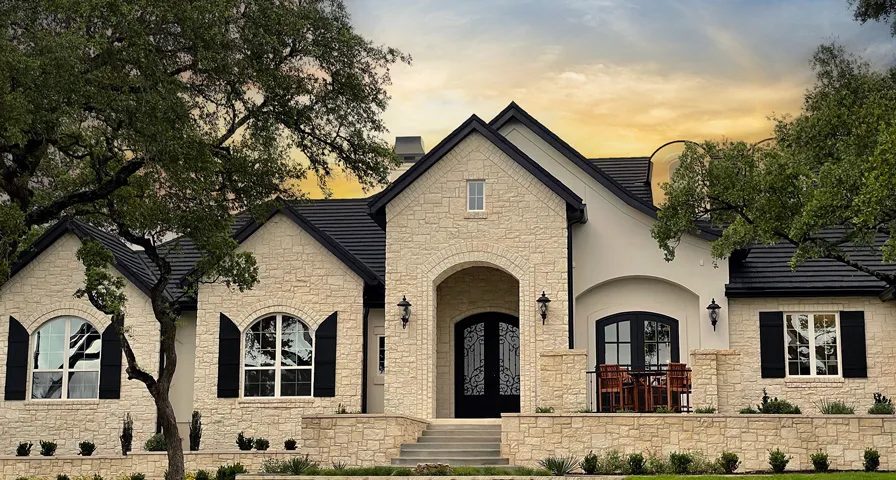
Coated (painted) steel shingles. Instead of stone granules, these use a baked-on paint finish (often a PVDF or "Kynar-type" coating prized for holding color). The standout here is relevant to Minnesota boards: EDCO Products has stamped steel roofing in Hopkins, Minnesota since 1946 and is the largest maker of residential steel roofs and siding in the country. Its ArrowLine Slate and Shake, Generations HD, and Infiniti Textured Shake lines lock together on all four sides, carry a UL Class 4 impact rating and wind resistance rated to at least 160 mph, and come with a lifetime, non-prorated warranty that includes hail and fade protection. Several colors carry an ENERGY STAR rating.
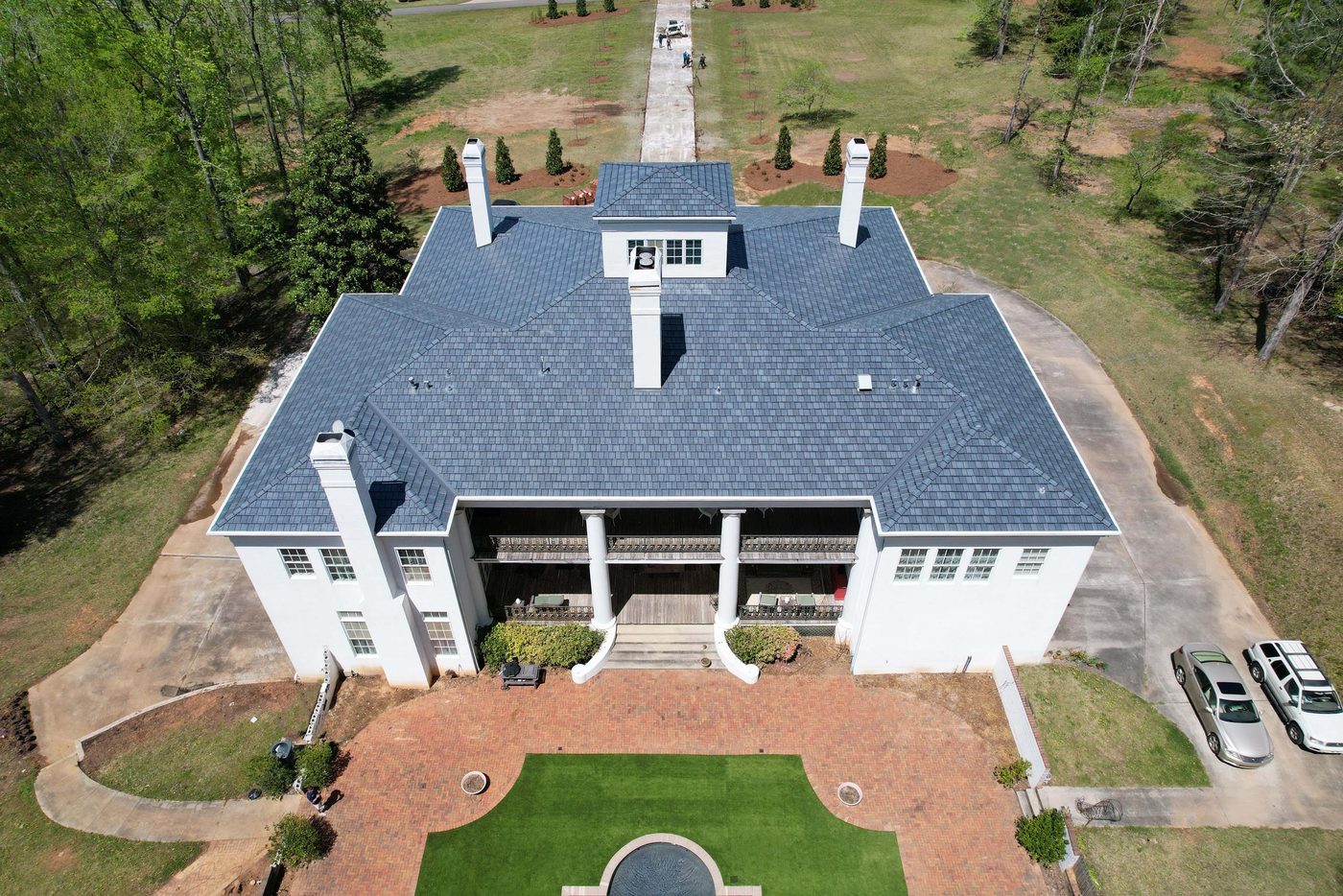
Aluminum shingles. Aluminum will not rust, which makes it attractive where corrosion is a concern, and it is lighter than steel. Isaiah Industries (Classic Metal Roofing Systems) is a long-running national manufacturer of aluminum shingle and shake profiles.
Metal roofing by material
- Steel is the most common and most economical metal roofing. Because bare steel can rust, it depends on its coating (galvanized or aluminum-zinc) and finish, so the coating and finish warranty matter as much as the steel itself.
- Aluminum costs more than steel but does not rust, which is why it shows up on coastal and high-humidity projects. It is lighter, an advantage on a re-roof.
- Zinc and copper are the premium end. They are expensive, they develop a natural weathered finish over time, and they can last a century or more. They are rare on association roofs but worth knowing exist.
What metal means for a Minnesota winter
Snow sheds fast, which cuts both ways. Metal's smooth surface sheds snow quickly, reducing the snow load sitting on the roof. The flip side is that a slab of snow can release all at once onto a walkway, an entry, a parked car, or a person below. For an association with shared sidewalks and parking under the eaves, snow guards (snow retention devices that hold or gradually release snow) are not optional, they are part of doing metal correctly. Manufacturers like EDCO even sell matched snow-retention accessories for their systems.
Metal does not, by itself, prevent ice dams. Ice dams form when warm air leaks into the attic, melts snow up high, and the meltwater refreezes at the cold eave. That is an attic ventilation and insulation problem, not a roof-surface problem. Metal sheds snow better, which helps, but a warm attic can still build an ice dam. We cover the mechanism on our Attic Ventilation and Insulation page.
Metal is light, fire-safe, and wind-tough. Metal roofing is non-combustible and typically carries a Class A fire rating (the highest). It is lighter than slate or tile, and quality systems resist very high winds. Its light weight sometimes allows installation over an existing roof, though whether that is permitted depends on the number of existing layers and your local code, so confirm it with your building official rather than assume.
What it means for your association
The long-cycle math can favor metal. Boards are choosing for a building the association owns indefinitely, funded by a reserve schedule. A metal roof costs more up front, commonly two to three times asphalt, but its long life can skip one or more replacement cycles and reduce how often owners face a special assessment for a roof. Whether that pays off depends on your reserve position and your owners' appetite for a larger one-time number.
Match the profile to the goal. Standing seam buys the modern look and the longest life. Stone-coated and coated steel shingles buy the look of shake or slate with metal durability, often at a lower cost than standing seam. Exposed fastener belongs on utility structures, not the homes.
Confirm these in writing on any metal bid:
- The UL 2218 impact class (Class 4 is the top) and the Class A fire rating.
- The wind rating for the specific product and install method.
- The finish warranty (the paint or coating), separately from the structural warranty, since fade and coating failure are what age a metal roof cosmetically.
- The snow-guard plan over every walkway, entry, and parking area.
- That the ice barrier and attic ventilation meet the 2020 Minnesota Residential Code (these apply to metal just as they do to asphalt).
Treat the above as the questions to raise, and confirm compliance for your specific buildings with your local building official and a licensed roofing professional.
Switching materials? Your underlayment and watershed change.
Converting from asphalt to metal is not just a new surface. Metal systems use different underlayment (often a high-temperature or fully-adhered membrane), the panels move as they heat and cool so the details differ, and how water and melting ice travel at the eaves and valleys changes with the profile. The Minnesota ice-barrier rule still applies to every covering. Before committing to a switch, get a watershed and detailing review from a qualified professional. See our Attic Ventilation and Insulation page for the building-science side.
Methodology
So you can see how this page was built.
- What is covered: metal roofing sorted by profile (standing seam, exposed fastener, metal shingles and tiles) and by material (steel, aluminum, zinc, copper), described from manufacturer published specs and independent standards. National manufacturers and product lines are named for reference only. No local contractors, installers, or management firms are rated or recommended anywhere on this page.
- Sources: manufacturer published specs and warranties, the UL 2218 impact standard, the 2020 Minnesota Residential Code, and U.S. Department of Energy / ENERGY STAR. Named and linked below.
- Last updated: 2026-07-20. Product references are re-verified annually or when a major product change surfaces.
Sources
- 2020 Minnesota Residential Code, Chapter 9 (Roof Assemblies), via ICC: codes.iccsafe.org (Opens in a new tab)
- Minnesota Department of Labor and Industry, residential code: dli.mn.gov (Opens in a new tab)
- UL 2218 impact standard overview (Insurance Institute for Business and Home Safety): ibhs.org (Opens in a new tab)
- U.S. Department of Energy / ENERGY STAR product directory: energystar.gov/products (Opens in a new tab)
- Manufacturer published specs: standing seam (McElroy Metal (Opens in a new tab), Petersen/PAC (Opens in a new tab), Sheffield Metals (Opens in a new tab)), stone-coated steel (DECRA (Opens in a new tab), Unified Steel / Westlake Royal (Opens in a new tab), Metrotile (Opens in a new tab)), coated steel shingles (EDCO Products (Opens in a new tab)), aluminum shingles (Isaiah Industries / Classic Metal Roofing (Opens in a new tab))
Next step
Weighing metal for a re-roof, or comparing a standing seam quote against a stone-coated or steel-shingle option? Download the Roof Replacement Evaluation Worksheet to line up impact class, wind rating, finish warranty, and snow-guard questions in one place, or send your specifics through the question form and we will point you to the right resources.