Gutters are the least glamorous part of a building and one of the most important. Their whole job is to catch the water coming off the roof and carry it away from the foundation, the walkways, and the walls. When they work, nobody notices. When they fail, the damage shows up far from the gutter itself: a wet basement, a rotted fascia, an eroded flower bed, or a sheet of ice across a shared sidewalk. This page explains what a gutter system is, how to spot the common problems, and what those problems mean for a Minnesota association.
This page helps you recognize and document problems, and points structural and code questions to your building official.
What a gutter system is
A gutter system has a few simple parts working together.
- Gutters are the troughs along the roof edge that catch runoff. The two common shapes are K-style (a flat-backed profile that looks like crown molding, the North American default because it carries the most water for its size) and half-round (the older, rounded profile seen on historic and high-end buildings).
- Downspouts are the vertical pipes that carry water down and away.
- Hangers are the brackets holding the gutter to the fascia (the flat board behind the gutter, at the roof edge).
- Extensions and splash blocks at the bottom of each downspout push water away from the foundation.
Sizing, in plain terms. Most homes use 5-inch K-style gutters, which handle typical roof areas up to roughly 5,500 square feet of drainage area. Larger, steeper, or high-runoff roofs step up to 6-inch, which carries roughly 25 to 50 percent more water (about 2 gallons per foot versus 1.2 for the 5-inch). A few rules of thumb from the plumbing code and sheet-metal standards: gutters should slope about a quarter inch for every 10 feet toward the downspout, and there should be a downspout about every 25 to 35 feet of run. One common and costly mistake is pairing 6-inch gutters with undersized downspouts, which bottlenecks the water and makes the bigger gutter overflow anyway (6-inch gutters want 3-by-4-inch downspouts). Exact sizing depends on roof area, pitch, and local rainfall, so have it calculated for your buildings rather than copied from the one next door.
How to spot gutter and drainage problems
Most of these you can catch from the ground during or right after a rain, or with a quick look in spring and fall.
- Water sheeting over the front edge during rain. The system is clogged, undersized, or wrongly sloped.
- Gutters sagging or pulling away from the fascia. Hangers are failing, often from the weight of trapped debris, standing water, or winter ice.
- Standing water or muck sitting in the gutter after the rain stops. The slope is wrong or the gutter is clogged, and standing water accelerates corrosion and freeze damage.
- Granules collecting in the gutters (the sand-like grit off asphalt shingles). A little is normal on a new roof, but a steady buildup is a sign the shingles are aging and shedding their protective surface.
- Peeling paint, rot, or stains on the fascia and soffit, or streaks down the siding. Overflow is getting behind the gutter.
- Erosion, mulch washouts, or pooling at the base of downspouts. Water is dumping at the foundation instead of being carried away.
- A damp or musty basement or crawlspace, or foundation cracks with moisture. Roof water is ending up against the foundation.
- Ice filling the gutters in winter, or icicles hanging heavy off the front. See the Minnesota note below.
The Minnesota winter angle
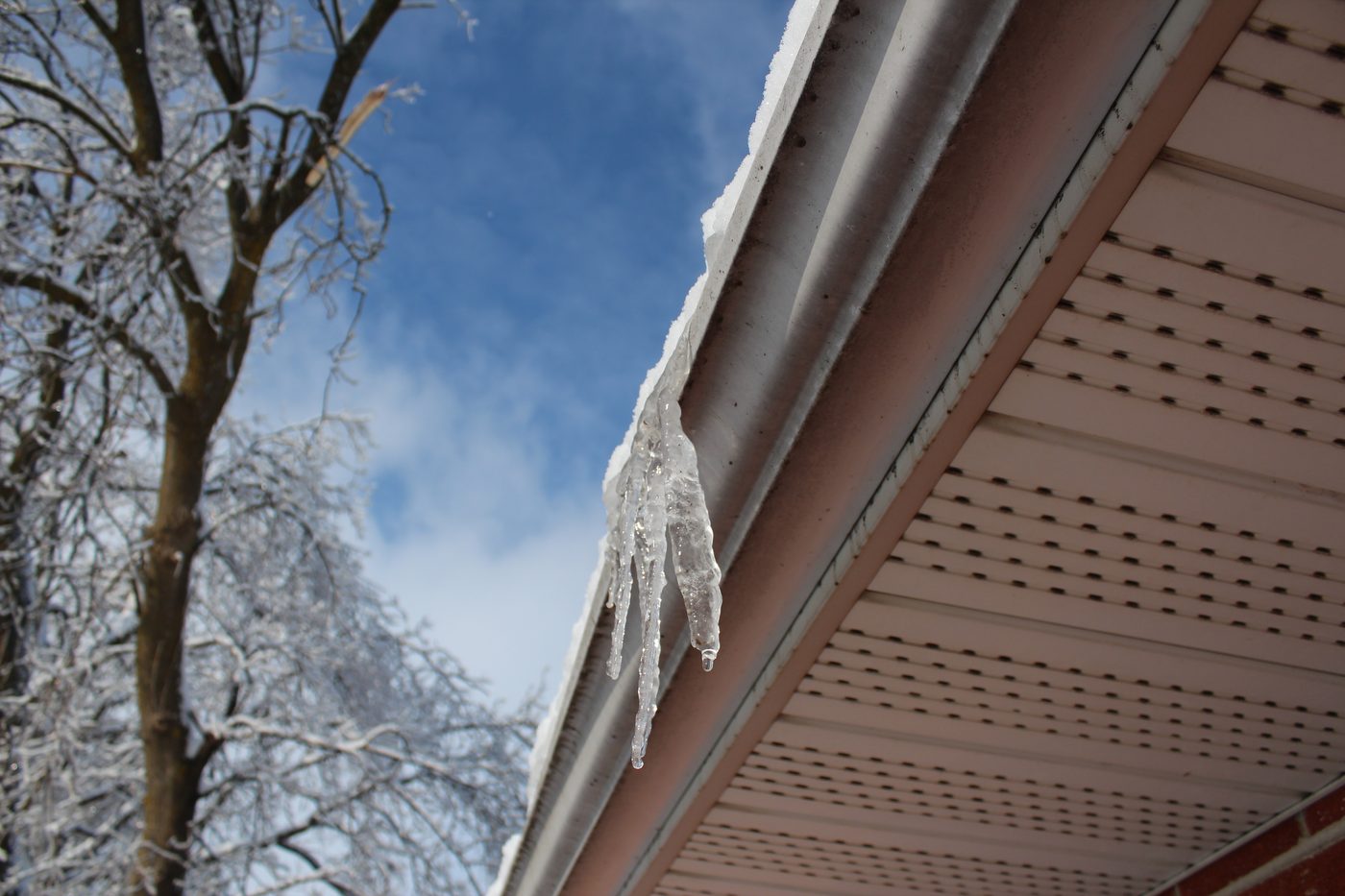
Gutters do not cause ice dams, but ice dams punish gutters. A common myth is that gutters cause ice dams. They do not. Ice dams form because a warm attic melts snow that refreezes at the cold eave (the full mechanism is on our Attic Ventilation and Insulation page). What gutters do is sit right in that cold zone, so they fill with ice, and the weight can bend or tear them off the fascia. If your buildings get ice dams, the fix is in the attic, not the gutter.
Watch where the meltwater goes. In a Minnesota thaw, downspouts can discharge a lot of water onto sidewalks and driveways, where it refreezes into a slip hazard. For an association, that is both a maintenance headache and a liability concern. Downspout extensions should carry water several feet away from foundations and clear of shared walkways, and it is worth checking where every downspout actually drains before winter.
Snow slides shear gutters, especially off metal and steep roofs. A sheet of snow releasing off a slick roof can rip a gutter loose. This is one more reason snow guards belong on metal roofs over any gutter, walkway, or entry (see our Metal Roofing Types page).
What it means for your association
Drainage is a whole-community system, not a single unit's problem. In townhomes and condominiums, one building's overflowing gutter or misdirected downspout can undermine a shared foundation, erode common landscaping, or ice a walkway that the association is responsible for. Gutter and drainage upkeep usually falls to the association as an exterior element, so it belongs on the maintenance calendar and, for replacement, in the reserve plan.
Cleaning is maintenance; replacement is capital. Clearing gutters in spring and fall is routine operating maintenance, and skipping it is the leading cause of the problems above. Full gutter replacement or an upsizing to handle a large roof is a capital item that belongs in the reserve study alongside the roof it serves.
When to bring in a professional. Recurring foundation moisture, grading and site-drainage problems, and fascia or structural rot are beyond a gutter cleaning and call for a qualified professional. If you find active water damage, document it with photos and dates and get it assessed.
A practical checklist for the board:
- Put gutter cleaning on the calendar for spring and fall, and after major storms.
- Walk the property in a hard rain once a year and note any gutter that overflows.
- Confirm every downspout has an extension carrying water away from the foundation and clear of walkways.
- Note granule buildup, which flags aging shingles to plan for in the reserve.
- Before winter, check that gutters are clear and downspouts are not discharging onto sidewalks.
Treat the above as the questions to raise, and confirm specifics for your buildings with a qualified professional.
Sources
- University of Minnesota Extension, managing water around the home: extension.umn.edu (Opens in a new tab)
- International Plumbing Code, Table 1106.6 (roof drainage area by gutter size and slope), via ICC: codes.iccsafe.org (Opens in a new tab)
- SMACNA (Sheet Metal and Air Conditioning Contractors' National Association), architectural sheet metal and gutter standards: smacna.org (Opens in a new tab)
- 2020 Minnesota Residential Code, Chapter 9 (Roof Assemblies), via ICC: codes.iccsafe.org (Opens in a new tab)
- Minnesota Department of Labor and Industry, residential code: dli.mn.gov (Opens in a new tab)
Next step
Seeing overflow, sagging gutters, or ice on the walkways after a thaw? Download the Gutter and Drainage Self-Check to walk your board through the warning signs and a seasonal maintenance schedule, or send your specifics through the question form and we will point you to the right resources.