Some associations want the look of a natural slate or cedar-shake roof without the weight, the fragility, the fire risk, or the maintenance that come with the real thing. That is what composite roofing is for. These are engineered look-alikes, molded from polymers or recycled rubber to imitate slate and hand-split shake, and they have quietly become one of the better fits for a townhome or condominium roof that wants a high-end appearance and a long service life.
This page explains what composite roofing is, the material families and the national brands within each, and where it earns its keep for an association. It names manufacturers and product lines for reference. It does not rate or recommend any contractor or management company, and it does not tell your board what to buy.
A quick vocabulary note. "Composite" and "synthetic" are used interchangeably in this category. Both mean a manufactured shingle built to look like a natural material. This page covers the look-alikes. Our Natural Slate and Wood Shake page covers the real materials they imitate.
What composite roofing is
A composite shingle is a manufactured piece, usually a foot or so wide, cast in a mold taken from real slate or real cedar so it carries authentic texture and irregularity. The material underneath the look is where the brands differ, and it sorts into three families.
Polymer and resin composites. The largest group. These use engineered plastics (either virgin resins or post-consumer recycled plastic) blended with UV stabilizers so the color holds up in sunlight.
- DaVinci Roofscapes (owned by Westlake Royal Roofing Solutions) makes slate and shake profiles from virgin resins with UV inhibitors. Published specs: Class A fire rating with standard underlayment, UL 2218 Class 4 impact, wind resistance to 110 mph, roughly half the installed cost of natural slate or shake, and a 50-year limited warranty.
- Brava Roof Tile builds its Old World Slate, Cedar Shake, and Spanish Barrel Tile lines with post-consumer recycled material. Published specs: Class 4 impact, a choice of Class A or Class C fire rating, wind rating of 110 mph and higher depending on install method, and a 50-year limited warranty.
- F-Wave makes its Revia line in slate and shake profiles with Class 4 impact, Class A fire, wind ratings up to 130 mph, and UV resistance.
Polyurethane composites. CeDUR casts its shakes from a closed-cell polyurethane foam molded off real cedar. It is notably light, roughly half the weight of the polymer brands, and it carries Class 4 impact, a Class A fire rating without needing a special fire-resistant underlayment, and a wind rating around 115 mph. The foam does not absorb moisture and adds a small amount of insulating value.
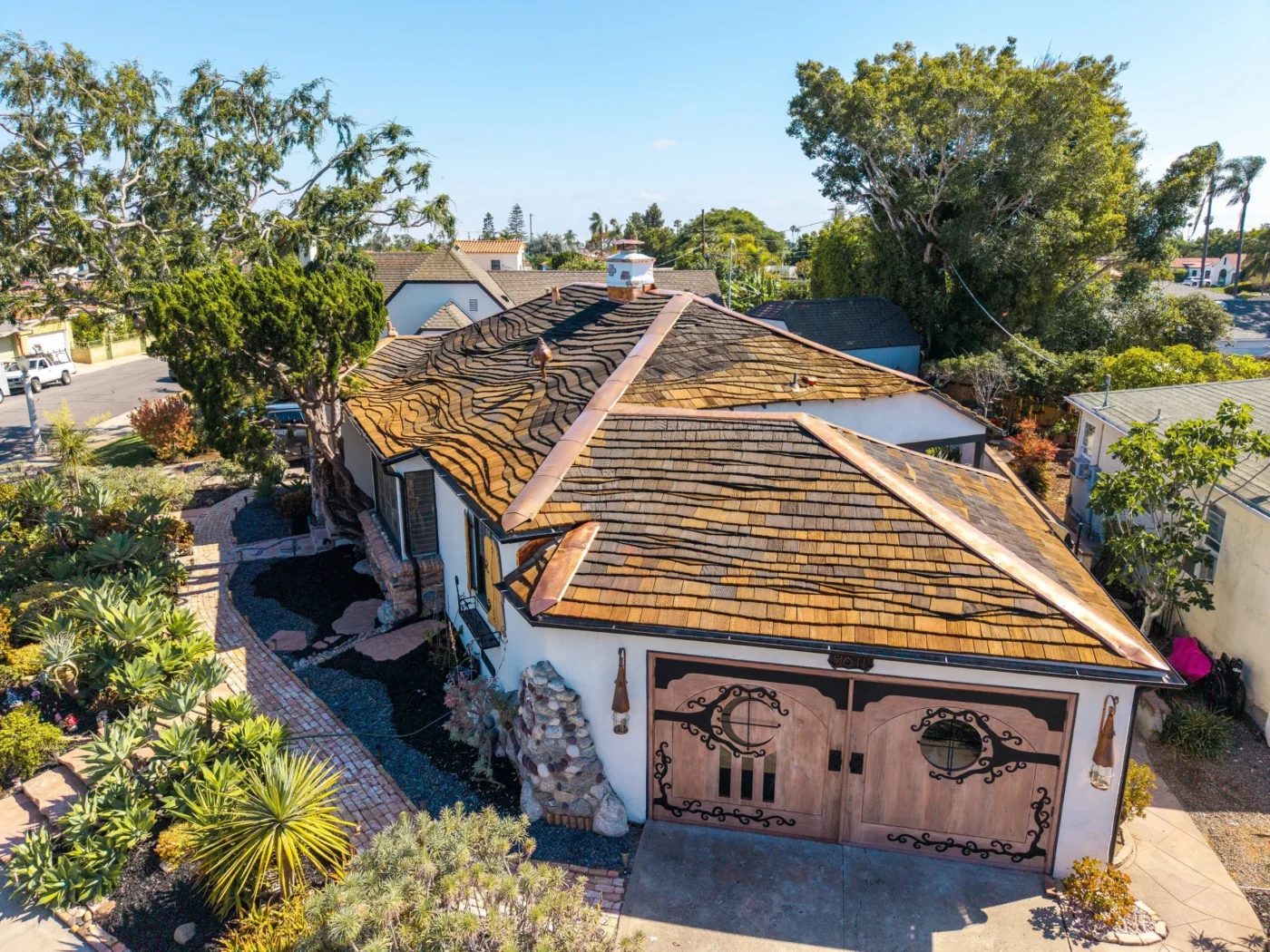
Recycled rubber composites. Brands like Euroshield press shingles from roughly 95 percent recycled material (largely recycled tires) into shake and slate looks. These lean into the environmental angle and hold up well to impact.
Across all three families, the shared traits are the selling points: they resist hail, ultraviolet light, and freeze-thaw cycling, they do not rot or invite insects the way real wood does, and a well-installed composite roof commonly lasts 40 to 50 years with little maintenance.
What it means for your association
The weight advantage is the quiet headline. Real slate and clay tile are heavy enough that putting them on a building not designed for them requires a structural evaluation and often reinforcement. Composite look-alikes weigh a fraction of that and install over standard roof decking, so an association can get the slate or shake appearance without a structural upgrade. That single fact is often what makes the look affordable at all.
For the cedar-shake look, composite solves a real problem. A genuine cedar shake roof is combustible and needs periodic staining, sealing, and pest attention. A composite shake gives the same appearance with a Class A fire rating (the highest) and effectively no maintenance. For an association weighing curb appeal against liability and upkeep, that tradeoff usually favors the composite.
Hail and Minnesota. Most composite lines carry the top UL 2218 Class 4 impact rating, tested with a 2-inch steel ball dropped from 20 feet. As with any material, Class 4 means resistance to cracking, not a guarantee of zero cosmetic marks after a severe storm.
Cost sits in the middle. Composite runs above premium asphalt and well below natural slate or shake, commonly landing near the price of a good metal roof. Because it lasts decades, the per-year cost can compete with cheaper materials that get replaced more often. Get current itemized bids for your actual roof areas rather than relying on a national range.
Two things to confirm in writing on any composite bid:
- The exact fire rating and what it requires. Most lines are Class A, but some reach Class A only with a specific underlayment, while others (CeDUR, for example) are Class A on their own. Confirm the assembly.
- The impact class (Class 4 is the top), the wind rating for the specific product, and the warranty term, including what is prorated and what transfers on sale.
Minnesota code still applies. The 2020 Minnesota Residential Code ice-barrier requirement (a self-adhering membrane from the eave to at least 24 inches inside the exterior wall line) and the attic ventilation requirement (at least 1 square foot of vent area per 150 square feet of attic) apply to composite roofs the same as any other covering.
Treat the above as the questions to raise, and confirm compliance for your specific buildings with your local building official and a licensed roofing professional.
Switching materials? Your underlayment and watershed change.
Moving to composite from asphalt, or from a failing natural slate or shake roof, changes more than the surface. Underlayment requirements differ by product, the fastening pattern is specific to the shingle, and how water and melting ice travel at the eaves and valleys shifts with the profile. The good news with composite is that its light weight rarely forces a structural upgrade, unlike the real slate it imitates. The Minnesota ice-barrier rule still applies. Before committing, get a watershed and detailing review from a qualified professional. See our Attic Ventilation and Insulation page for the building-science side.
Methodology
So you can see how this page was built.
- What is covered: composite and synthetic roofing sorted by material family (polymer and resin, polyurethane, recycled rubber), described from manufacturer published specs and independent standards. National manufacturers and product lines are named for reference only. No local contractors, installers, or management firms are rated or recommended anywhere on this page.
- Sources: manufacturer published specs and warranties, the UL 2218 impact standard, and the 2020 Minnesota Residential Code. Named and linked below.
- Last updated: 2026-07-20. Product references are re-verified annually or when a major product change surfaces.
Sources
- UL 2218 impact standard overview (Insurance Institute for Business and Home Safety): ibhs.org (Opens in a new tab)
- 2020 Minnesota Residential Code, Chapter 9 (Roof Assemblies), via ICC: codes.iccsafe.org (Opens in a new tab)
- Minnesota Department of Labor and Industry, residential code: dli.mn.gov (Opens in a new tab)
- Manufacturer published specs: DaVinci Roofscapes / Westlake Royal (Opens in a new tab), Brava Roof Tile (Opens in a new tab), CeDUR (Opens in a new tab), F-Wave, Euroshield (Opens in a new tab)
Next step
Considering a slate or shake look for your community without the weight or upkeep of the real thing? Download the Roof Replacement Evaluation Worksheet to line up fire rating, impact class, warranty, and code questions in one place, or send your specifics through the question form and we will point you to the right resources.